

Zapier remains the default choice for connecting web applications, but its pricing model scales rapidly as task volume grows. Building multi-step automations across dozens of tools often creates brittle flowchart pipelines that break whenever an API payload changes or a workflow requires human judgment. This guide compares the top Zapier alternatives in 2026 across two distinct architectures: traditional trigger-action app automation platforms and persistent AI workforce platforms.
TL;DR: The best Zapier alternatives in 2026
Selecting a Zapier alternative depends on whether your team needs deterministic data routing or autonomous task completion. Here is how the top platforms compare:
- Make: Best for visual workflow building and data transformation. Its spatial canvas and complex routing tools handle data mappers at a lower cost per operation than Zapier.
- n8n: Best open-source option for technical teams and developers. It offers full data privacy through self-hosting, execution-based pricing, and custom JavaScript or Python scripting nodes.
- Workato: Best for enterprise IT governance. It delivers enterprise-grade security, access controls, and recipe lifecycle management for large organizations.
- Relay.app: Best for human-in-the-loop app automation. It integrates manual approval checkpoints and single-click AI prompt steps directly into standard app flows.
- Spinnable: Best persistent AI worker platform. Rather than building rigid flowchart Zaps, teams deploy autonomous AI employees that maintain context, execute multi-app tasks, and collaborate naturally across roles like executive assistants, sales representatives, and support agents.
At a glance: Comparing top Zapier alternatives
The table below summarizes key differences in architecture, pricing, and workflow fit across leading platforms in 2026.
| Platform | Category / Architecture | Best for | Starting price (billed monthly) | Key advantage vs. Zapier | Non-fit scenario |
|---|---|---|---|---|---|
| Spinnable | Persistent AI worker platform | Autonomous multi-app roles & reasoning | Plans start at $50/mo + VAT (15-day free trial on standard plans) | Autonomous context handling without rigid flowchart maintenance | Deterministic high-frequency database pings with zero LLM reasoning |
| Make | Visual app automation | Visual workflow mapping & data parsing | $10.59/month (Free tier available) | Spatial drag-and-drop canvas with lower cost per operation | Non-technical users who want simple one-click setups without JSON mapping |
| n8n | Open-source workflow automation | Developer flexibility & self-hosted privacy | $24/month Cloud (€20) / Free self-hosted | Full source code control and execution-based pricing | Non-technical teams unable to manage Docker containers or webhooks |
| Workato | Enterprise iPaaS | Enterprise IT governance & security | Custom quote (Enterprise pricing) | Enterprise security, SCIM/SSO, and recipe lifecycle controls | Small teams or mid-market businesses needing low-cost self-serve tools |
| Relay.app | Human-in-the-loop automation | Step-by-step flows with manual approvals | $38/month (1,000 runs/month) | Built-in human approval checkpoints and clean team collaboration UI | High-volume background data migrations requiring zero human oversight |
| Zapier | Trigger-action app integration | Simple linear web app connections | $29.99/month (Free tier available) | Broadest integration catalog with over 7,000 pre-built app connectors | Complex multi-branch logic where per-task pricing becomes prohibitively expensive |
Commercial interest disclosure: Spinnable is the publisher of this guide. We build autonomous AI workers that perform multi-app workflows. To help you choose the right architecture, this evaluation uses objective, source-backed criteria and explicitly covers scenarios where traditional app integration tools are the better fit.
Methodology and source verification: Our analysis evaluates platforms across ten operational criteria: workflow fit, integration breadth, governance, security, maintainability, error handling, setup speed, total cost of ownership, regional availability, and support. All capabilities, pricing structures, and plan limits reflect official first-party vendor documentation, terms, and public pricing pages verified as of August 2026. This review claims no unverified hands-on benchmarks; performance claims reflect published vendor specifications.
Understanding the shift: App automation vs. persistent AI workers
Evaluating Zapier alternatives requires understanding a core architectural divide in modern workflow software: traditional trigger-action app automation versus persistent AI workforce platforms.
Traditional app automation tools like Zapier, Make, n8n, Workato, and Relay.app operate on deterministic, event-driven rules. A trigger in App A causes an action in App B. If a customer fills out a form, the platform sends a webhook, formats the data, and creates a database record. This model excels at structured, predictable data pings. However, when a workflow requires reading an email, judging intent, synthesizing research, or making a context-dependent decision, rigid IF/THEN flowcharts require endless conditional branches. When an API payload changes or an unexpected edge case occurs, the pipeline halts until an administrator updates the flow.
Persistent AI workforce platforms like Spinnable take a different approach. Instead of configuring individual webhook triggers and error handlers, teams deploy autonomous AI employees that maintain continuous context across corporate communications and productivity tools. You instruct an AI worker using natural language, grant access to relevant tools, and set operational guardrails. The worker evaluates inputs, handles multi-step tasks across multiple applications, asks for clarification when necessary, and adapts to novel situations without breaking fixed flowchart rules. Understanding how persistent AI workers operate helps teams identify whether they need point-to-point data integration or autonomous task execution.
1. Spinnable: Best for autonomous AI workers
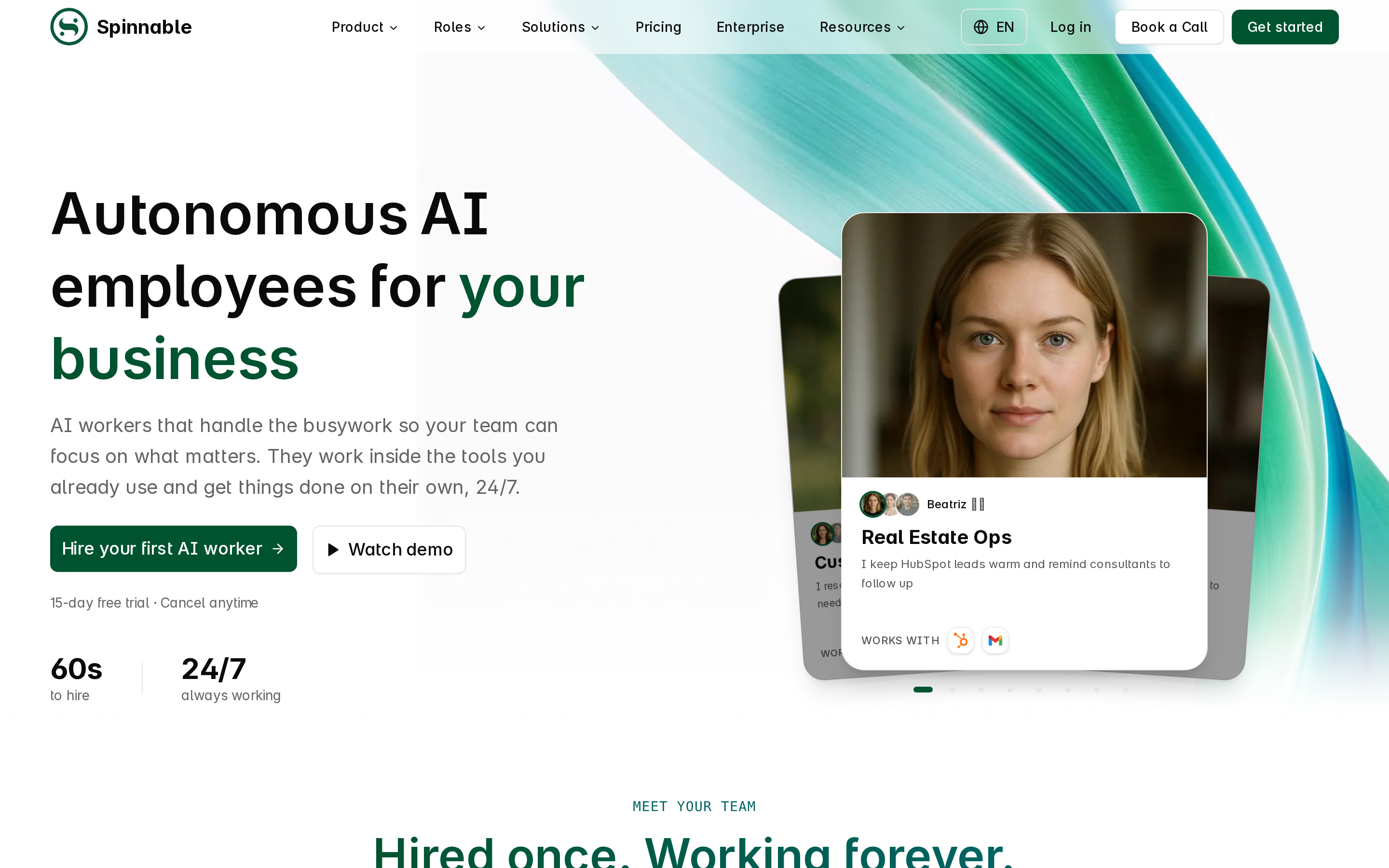
Spinnable is a persistent AI workforce platform built specifically for non-technical teams to automate complex, multi-app business operations. Rather than requiring users to map visual nodes or write conditional scripts, Spinnable enables team leads to hire and configure specialized AI employees in 60 seconds using plain language instructions.
Let's say you are an operations lead managing inbound partner requests. In a traditional Zapier setup, you must construct a 12-step Zap connecting your form builder, CRM, email provider, Slack, and document repository, adding custom filter steps for every lead category. If a partner sends a custom request outside the expected form fields, the Zap fails. With an executive assistant AI worker in Spinnable, the worker monitors the inbox, cross-references partner details across connected systems, drafts tailored responses, schedules follow-up meetings, and alerts your team across email, WhatsApp, Slack, and Microsoft Teams with complete contextual summaries.
Spinnable provides dedicated AI workers for key business functions, including a sales development representative worker for prospect research and outreach, a content assistant AI worker for multi-channel editorial production, and a customer support AI worker for resolving complex user inquiries across helpdesk tools.
Best for: Teams looking to delegate complete operational roles and multi-step reasoning workflows without maintaining complex flowchart rules.
Pros:
- Operates autonomously across multiple productivity tools without manual node-by-node mapping.
- Maintains persistent contextual memory across conversations and task histories.
- Adapts flexibly to unstructured inputs, emails, and documents that break rigid trigger-action Zaps.
- Provides natural language instruction interfaces and team collaboration capabilities.
Cons:
- Not designed for raw, high-frequency database pings where zero reasoning is needed.
- Probabilistic AI outputs require human oversight guardrails during initial onboarding.
Pricing model: Plans start at $50/month + VAT, and standard plans include a 15-day free trial. Spinnable offers transparent pricing tiers based on active AI worker scope and operational capabilities, avoiding per-step API task traps.
When Spinnable is a non-fit: Spinnable is not the right choice if your primary requirement is high-volume, deterministic data replication, such as syncing 50,000 raw database records per hour between SQL servers without any LLM evaluation.
2. Make: Best for visual workflow building and data transformation
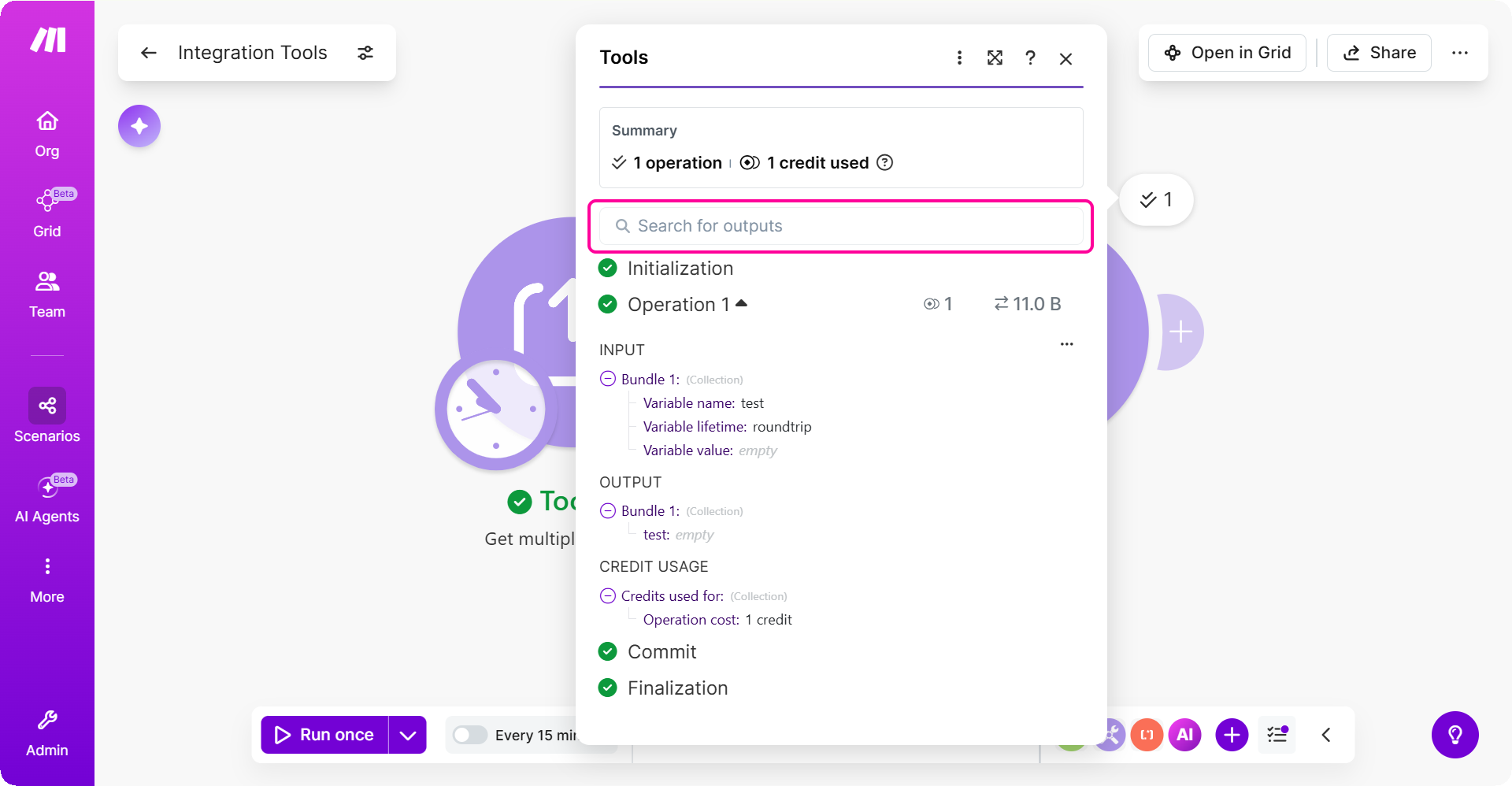
Make (formerly Integromat) is an app automation platform built around a visual canvas. It allows users to drag and drop application nodes, create complex branching paths with routers, and map data parameters visually.
Let's say you run an e-commerce operation that processes orders from multiple storefronts. In Make, you can build a scenario that receives order webhooks, filters records by country, parses line items through an array aggregator, and routes order details to different fulfillment APIs. The visual canvas makes it clear where data moves at each execution step.
Best for: Operations specialists and power users who need advanced visual data mappers, array aggregators, and error-handling routers.
Pros:
- Spatial canvas provides clear visibility into data flow and execution history.
- Significantly lower operational cost per task compared to Zapier on complex multi-step flows.
- Robust built-in tools for array manipulation, data parsing, and JSON transformation.
Cons:
- Steeper learning curve for non-technical users than Zapier's linear builder.
- Large scenarios with dozens of router branches can become cluttered and difficult to audit.
Pricing model: Make offers a Free plan with 1,000 monthly operations. Paid tiers start at $10.59/month for Core (10,000 operations), $18.82/month for Pro, and $34.12/month for Teams, billed monthly.
When Make is a non-fit: Make is not ideal for non-technical teams who prefer simple template setups or organizations seeking autonomous AI agents that handle unstructured conversational tasks without manual diagramming.
3. n8n: Best open-source platform for developer control and privacy
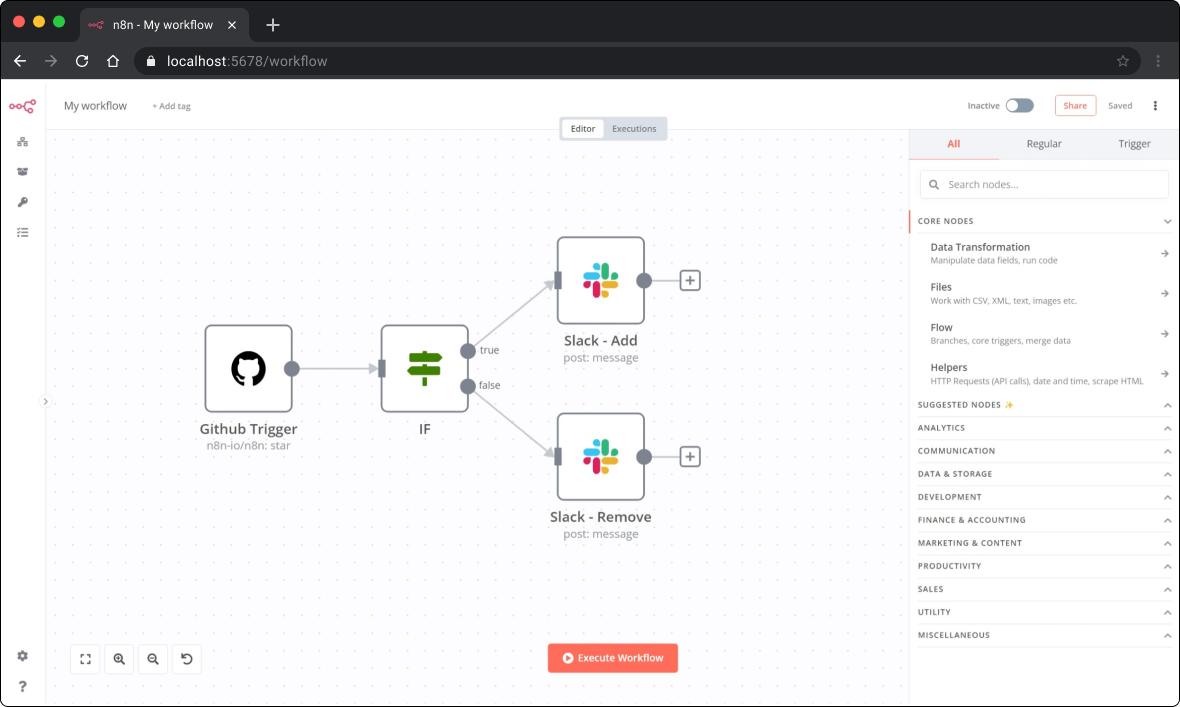
n8n is an open-source workflow automation platform that gives engineering teams complete control over their automation infrastructure. It can be self-hosted on private servers or accessed via n8n Cloud.
Let's say you are a technical lead at a healthcare or fintech firm with strict data residency mandates. Using n8n's self-hosted deployment, you can process sensitive user payloads inside your private cloud without routing customer data through third-party automation servers. Developers can insert native JavaScript or Python code nodes directly into any workflow step to perform custom transformations.
Best for: Developers, IT managers, and privacy-focused teams who need self-hosted infrastructure, custom code nodes, and predictable execution costs.
Pros:
- Free self-hosted community edition eliminates recurring subscription fees for self-managed setups.
- Execution-based billing counts entire workflow runs rather than individual step operations.
- Native Python and JavaScript code nodes allow custom data manipulation without external webhooks.
Cons:
- Self-hosting requires technical expertise to deploy, maintain, and secure Docker instances.
- Smaller catalog of pre-built native app connectors compared to Zapier's third-party library.
Pricing model: n8n is free for self-hosted community usage. Cloud tiers start at €20/month (approximately $24/month) for Starter (2,500 executions/month) and €50/month for Pro (10,000 executions/month).
When n8n is a non-fit: n8n is a poor fit for non-technical business teams who lack engineering resources to maintain webhooks, server hosting, or code syntax.
4. Workato: Best for enterprise-grade governance and iPaaS integration
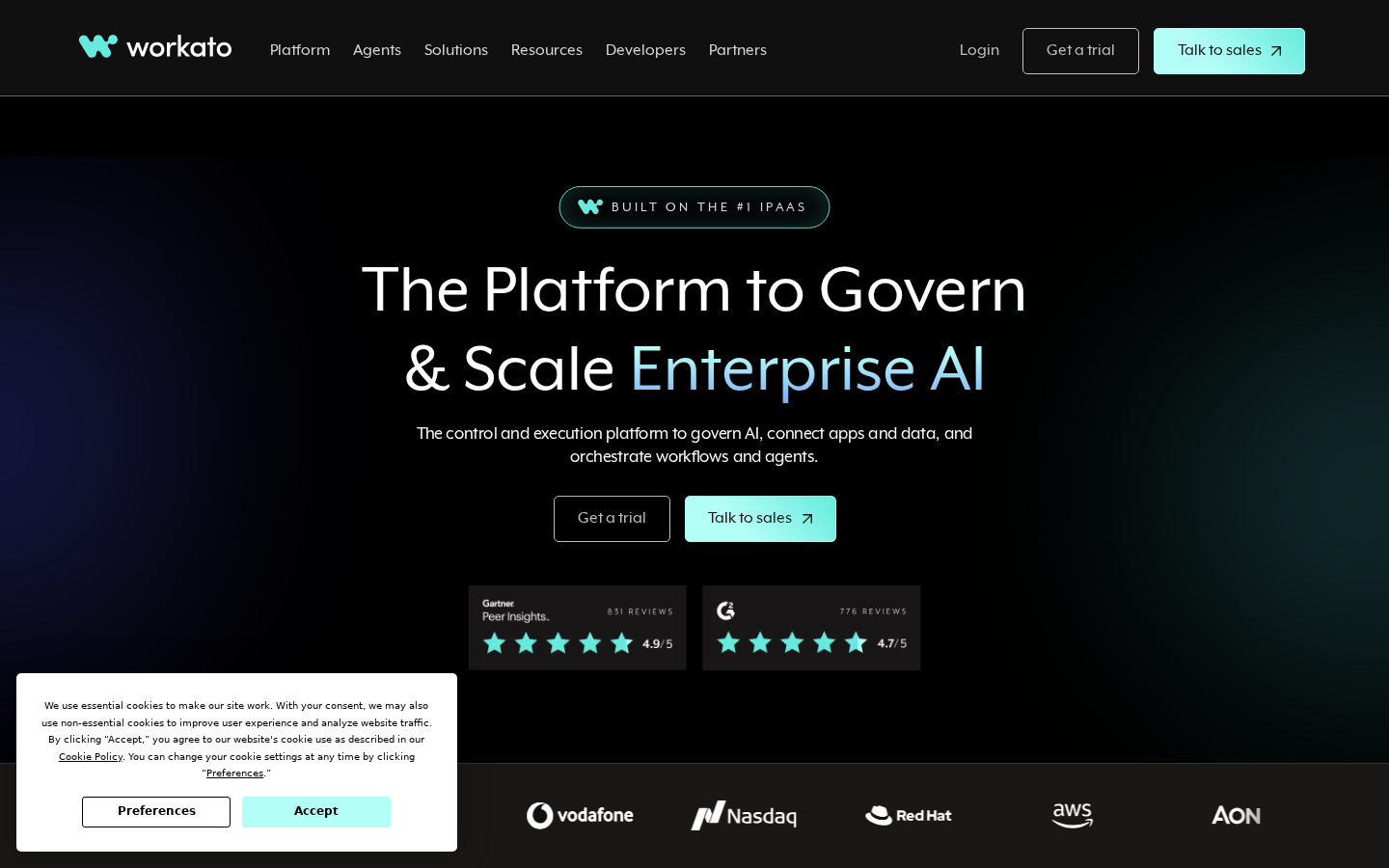
Workato is an enterprise integration platform as a service (iPaaS) built for large organizations requiring centralized IT governance, compliance, and multi-system orchestration.
Let's say an enterprise IT department needs to coordinate employee onboarding across HR systems, identity management tools, security access groups, and ERP software. Workato provides automated "recipes" equipped with role-based access controls, SCIM provisioning, enterprise SSO, detailed audit logging, and lifecycle environments for development, testing, and production.
Best for: Enterprise IT teams requiring enterprise security compliance, central management, and high-volume systems integration.
Pros:
- Enterprise security posture including SOC2 Type II compliance, ISO certifications, and RBAC controls.
- Comprehensive enterprise connector coverage for ERPs like SAP, NetSuite, and Salesforce.
- Governance tools supporting recipe deployment lifecycles across enterprise dev environments.
Cons:
- High annual contract costs make it inaccessible for small and mid-market teams.
- Complex enterprise implementation requiring specialized platform training.
Pricing model: Workato operates exclusively on custom enterprise quote pricing, typically structured around workspace fees and recipe capacity packs.
When Workato is a non-fit: Workato is not suitable for small businesses, solopreneurs, or agile teams seeking self-serve, budget-friendly automation tools without enterprise contracts.
5. Relay.app: Best for human-in-the-loop app automation
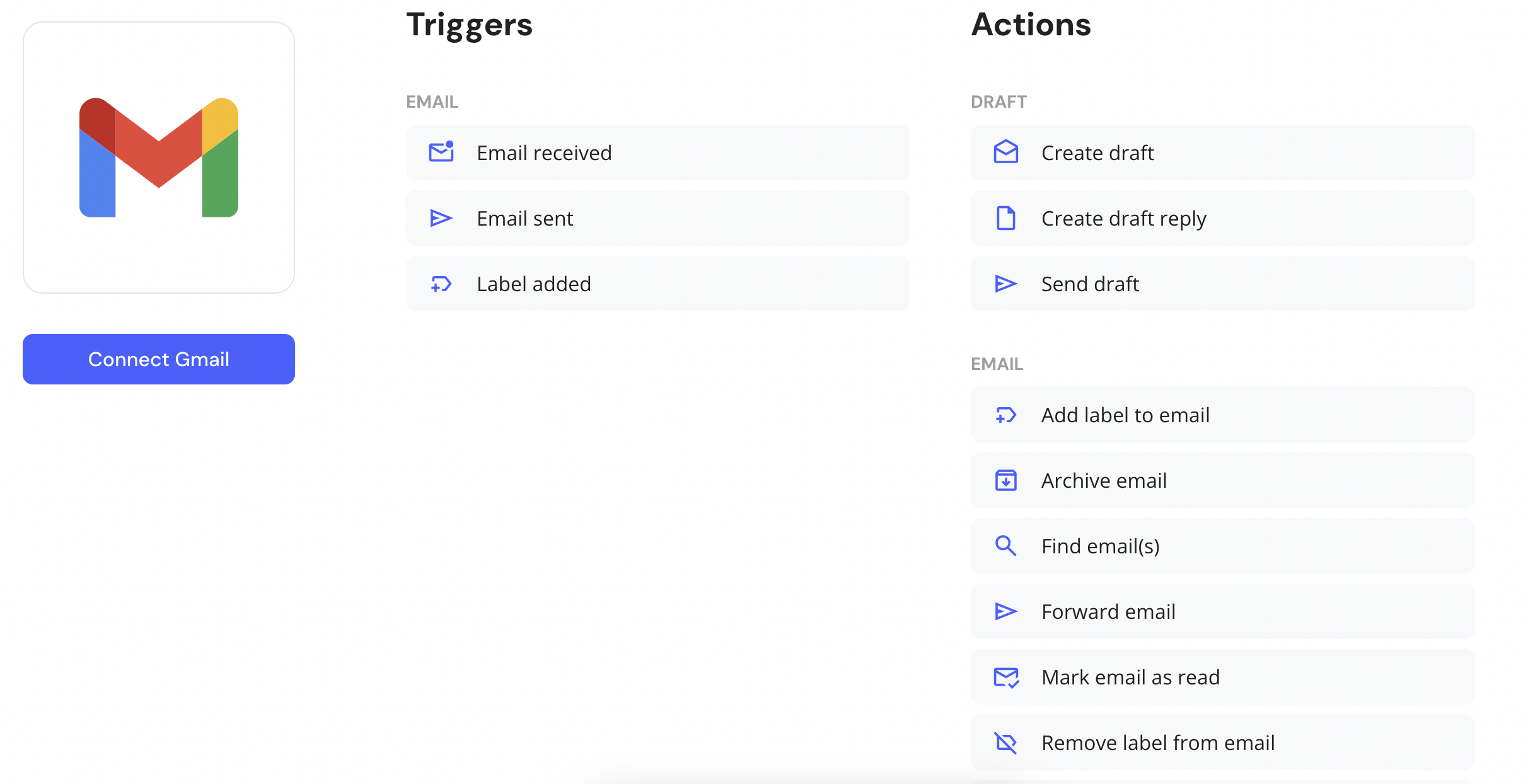
Relay.app is an app automation tool designed specifically to combine automated application triggers with human approval checkpoints and simple AI prompt steps.
Let's say a marketing manager wants to automate social media posting while maintaining editorial quality control. In Relay.app, the flow can automatically extract published blog articles, generate draft post copy using an integrated AI step, send a notification to a manager for approval inside Slack, and post to social accounts only after a team member clicks approve.
Best for: Teams that want clean step-by-step app integration with manual verification steps built directly into the workflow.
Pros:
- Native human-in-the-loop approval steps prevent unverified automated actions.
- Includes single-click AI prompt steps for text summarization and extraction.
- Modern, intuitive user interface designed for non-technical team collaboration.
Cons:
- Fewer total app integrations than established platforms like Zapier or Make.
- Remains a step-by-step linear automation builder rather than an autonomous AI agent platform.
Pricing model: Relay.app starts at $38/month for Starter (1,000 runs/month) and $98/month for Team (5,000 runs/month), with custom enterprise quotes available.
When Relay.app is a non-fit: Relay.app is not intended for fully autonomous AI worker operations that need to make continuous independent decisions without manual step definitions.
6. Zapier: Benchmark review and when to stay
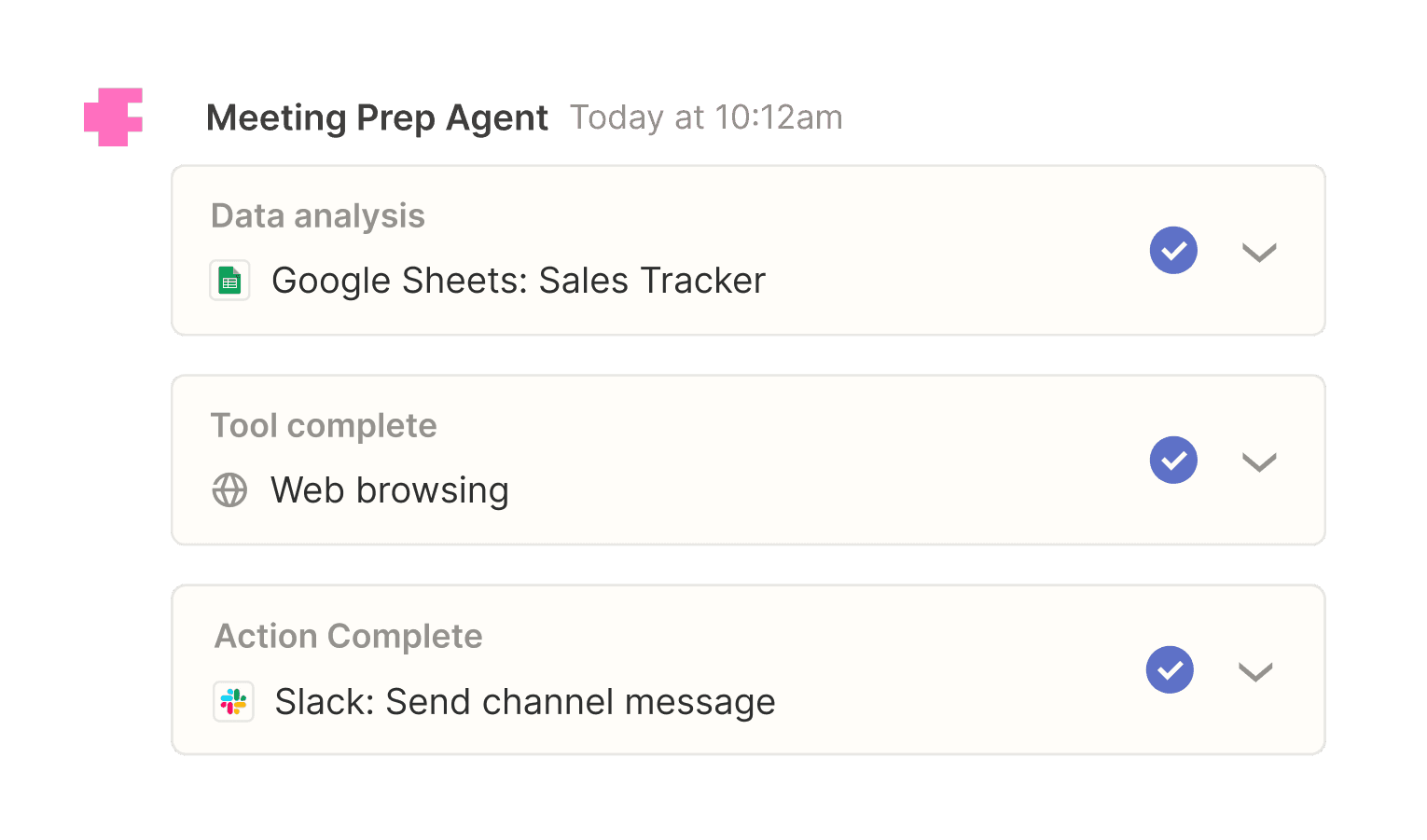
Zapier remains the benchmark platform for standard no-code app integrations, offering an library of over 7,000 connected applications and thousands of pre-built templates.
Our detailed Zapier platform review highlights its ease of use for simple linear workflows. However, as documented in our analysis of Zapier pricing limits , task consumption escalates rapidly when building multi-step Zaps. For instance, a Zap with five sequential actions executing 1,000 times per month consumes 5,000 tasks, forcing teams into higher pricing tiers.
Best for: Beginners, solopreneurs, and teams needing quick, linear connections between niche SaaS apps without writing code.
Pros:
- Largest third-party app ecosystem with over 7,000 supported integrations.
- Simple guided setup for two-step and basic multi-step Zaps.
- Extensive template library for common business tasks.
Cons:
- Task-based pricing becomes expensive at higher volume.
- Rigid flowchart logic makes complex branching and error handling difficult to manage.
- Lacks persistent AI memory for handling unstructured multi-app workflows.
Pricing model: Zapier offers a Free plan (100 tasks/month, 2-step Zaps). Paid plans start at $29.99/month for Professional (750 tasks/month) and $103.50/month for Team (2,000 tasks/month), billed monthly.
When to stay with Zapier: You should stay on Zapier if you rely on obscure SaaS applications only Zapier supports, or if your automations consist of low-volume, two-step linear tasks that stay well within basic plan limits.
How to choose the right Zapier alternative for your team
Selecting the best workflow automation tool requires aligning platform architecture with your team's technical skills, task volume, and operational complexity:
- Choose Make if you want visual drag-and-drop scenario building with lower per-operation costs for complex data mappers.
- Choose n8n if you have engineering resources and require open-source code control, custom scripting, and self-hosted data privacy.
- Choose Workato if you are an enterprise organization requiring centralized IT governance, SOC2 compliance, and enterprise ERP connectors.
- Choose Relay.app if your workflows require mandatory human approval checkpoints between automated app steps.
- Choose Spinnable if you want to deploy autonomous AI workers that handle complete multi-app roles, unstructured communication, and reasoning without maintaining brittle flowchart Zaps.
Frequently asked questions
What is the cheapest Zapier alternative?
Make offers a free plan with 1,000 monthly operations and paid plans starting at $10.59 per month. n8n provides a completely free self-hosted community edition for teams capable of managing their own server infrastructure.
Why do teams move away from Zapier?
Teams move away from Zapier primarily due to high task-based pricing at scale, fragile flowchart setups for complex workflows, and the inability of traditional Zaps to handle unstructured data or autonomous decision-making.
What is the main difference between app automation and AI workers?
Traditional app automation relies on rigid IF/THEN rules that trigger specific actions when events occur. AI workers operate autonomously using contextual memory and reasoning to complete multi-step tasks across apps without requiring pre-defined flowcharts for every scenario.
Is n8n completely free to use?
n8n is free to download and self-host under its fair-code community license. Teams that prefer a managed cloud environment can subscribe to n8n Cloud starting at approximately $24 per month.
Can AI worker platforms like Spinnable replace traditional Zapier workflows?
Spinnable replaces complex Zapier setups that involve reasoning, communications, research, and multi-step task execution. For simple 2-step API webhooks with zero logic, traditional app integration tools remain effective.
Ready to move beyond rigid Zaps?
If your team spends hours building and updating brittle flowchart Zaps, persistent AI workers offer a cleaner approach. Create your first AI worker with Spinnable to delegate complex, multi-app workflows without managing trigger-action rules.