

Enterprise decision-makers evaluating AI worker platforms in 2026 must separate managed workforce platforms built for continuous multi-channel execution from developer automation frameworks. Unlike simple task bots, an enterprise AI worker platform provides role-based deployment, persistent memory, multi-channel execution, and strict governance controls including human approval matrices. This guide evaluates five top enterprise AI worker platforms based on architecture, control models, verified pricing, and non-fit scenarios.
TL;DR: Top AI Worker Platforms at a Glance
Enterprise AI worker platform selection depends heavily on existing software stack commitments. Spinnable leads for managed autonomous role execution across Slack, WhatsApp, and CRMs with built-in human supervision. Microsoft Copilot Studio is ideal for organizations standardized on Microsoft 365 and Azure, while Salesforce Agentforce serves CRM-centric sales and support teams. ServiceNow AI Platform targets enterprise IT service management, and n8n provides a self-hosted open-source option for developer-led workflows.
At a glance: Enterprise AI worker platform comparison
The table below compares core deployment models, primary ecosystem focus, and verified pricing structures across leading enterprise AI worker platforms.
| Platform | Core Deployment Model | Primary Ecosystem Fit | Governance & Supervision | Public Pricing Model |
|---|---|---|---|---|
| Spinnable | Managed autonomous workforce platform | Slack, WhatsApp, Gmail, HubSpot, Salesforce | Granular approval matrices and human intervention | Role-based subscription tiers |
| Microsoft Copilot Studio | Enterprise low-code Copilot deployment | Microsoft 365, Teams, Power Platform, Azure | Microsoft Purview compliance and tenant controls | $200/month for 25,000 message capacity tenant pack |
| Salesforce Agentforce | CRM-embedded autonomous agent suite | Salesforce Sales Cloud, Service Cloud, Data Cloud | Salesforce Einstein trust layer and permission sets | $2 per conversation execution (contact sales) |
| ServiceNow AI Platform | ITSM and enterprise service workflow automation | ServiceNow Now Platform, ITIL service management | ServiceNow RBAC, audit logging, and change controls | Custom enterprise license tiers (contact sales) |
| n8n | Open-source workflow automation and AI node execution | 400+ native nodes, custom Webhooks, self-hosted Docker | Self-hosted data control, execution logs, community security | Free self-hosted core; Cloud plans from $20/month |
Detailed AI worker platform reviews
1. Spinnable: Best for managed autonomous roles and multi-channel workforce execution
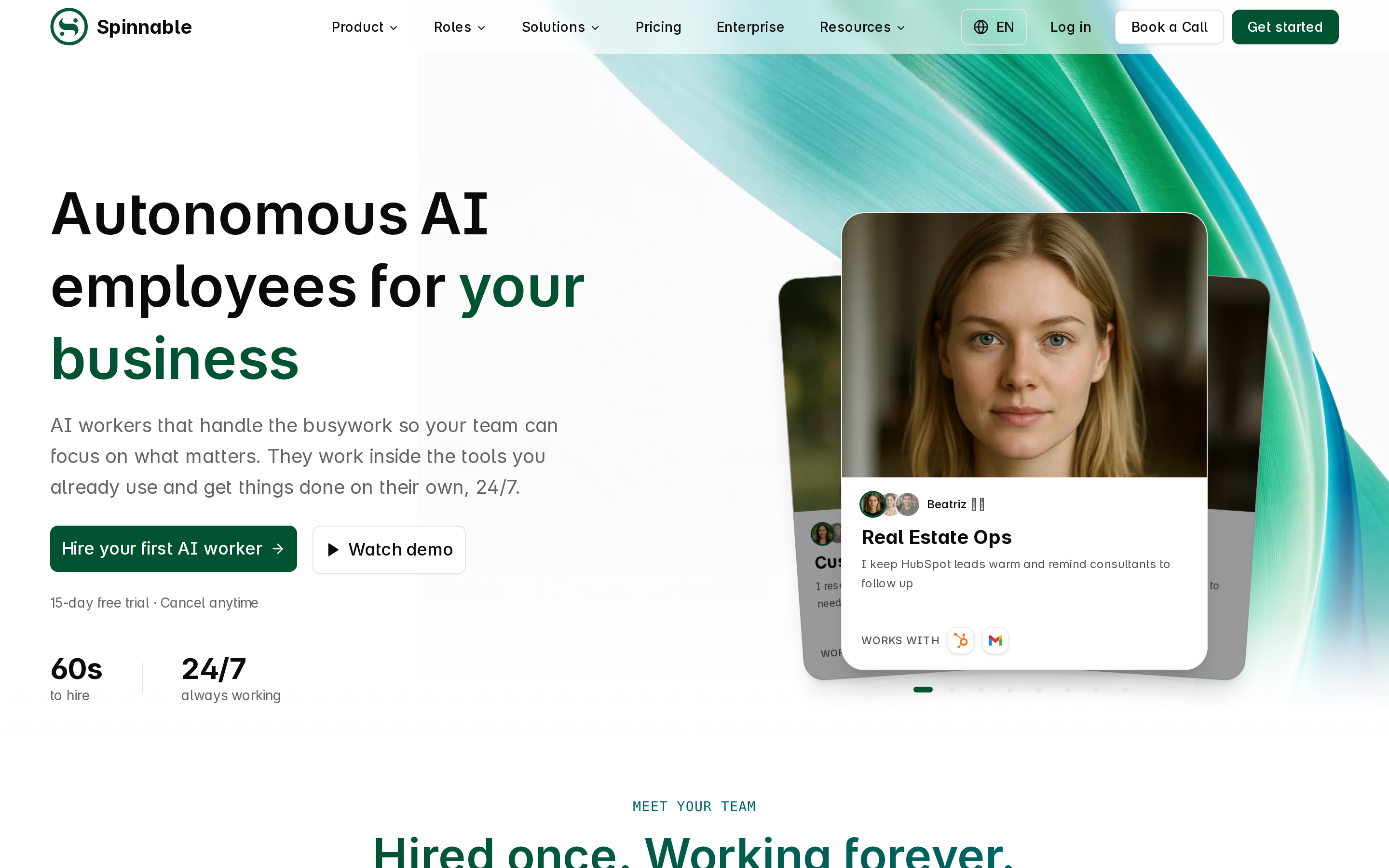
What it does: Spinnable provides a managed AI worker platform that deploys autonomous digital workers into active business channels like Slack, WhatsApp, and email. Each worker executes complete role functions, retains long-term memory, and integrates natively with business software.
Best for: Operations leaders wanting turn-key AI worker forces with built-in human approval gates and multi-channel connectivity.
Factual pros:
- Turn-key role setup eliminating complex custom backend software development.
- Native execution across primary business messaging platforms including Slack and WhatsApp.
- Built-in approval rules for high-stakes external messages or financial updates.
Factual cons:
- Cloud-managed environment requires an enterprise subscription.
- Custom deep legacy software integration requires initial API mapping.
Publicly verified pricing model: Spinnable uses structured role-based subscription tiers based on active worker seats and execution volume. Details are available on Spinnable.ai.
Non-fit scenarios: Organizations seeking a purely self-hosted, offline script library without cloud messaging connectivity.
2. Microsoft Copilot Studio: Best for native Microsoft 365 and Azure enterprise environments
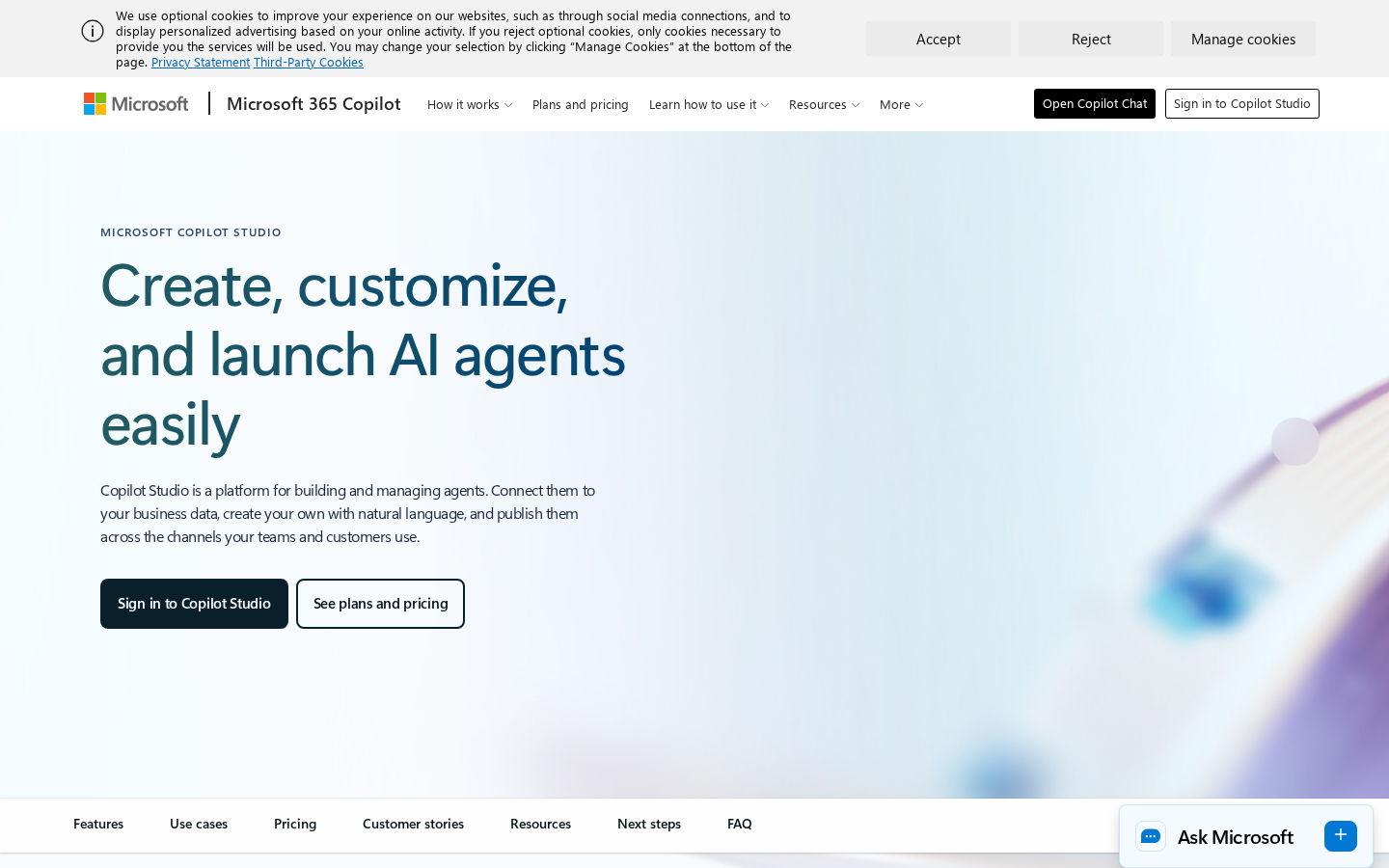
What it does: Microsoft Copilot Studio enables enterprise teams to build, customize, and publish custom Copilots and AI workers across Microsoft Teams, SharePoint, and external websites using Power Platform connectors.
Best for: Enterprise organizations heavily committed to Microsoft 365, Teams, and Azure infrastructure.
Factual pros:
- Direct integration with Microsoft 365 security permissions and Microsoft Purview governance.
- Access to hundreds of pre-built Power Platform enterprise connectors.
Factual cons:
- Capacity pack pricing can scale quickly for high-volume consumer-facing interactions.
- Less optimized for non-Microsoft messaging tools like WhatsApp.
Publicly verified pricing model: Standard tenant pricing is $200 per month for a capacity pack of 25,000 messages, with add-ons for user licenses.
Non-fit scenarios: Startups or non-Microsoft organizations operating primarily on Google Workspace and Slack.
3. Salesforce Agentforce: Best for CRM-centric sales and service operations

What it does: Salesforce Agentforce delivers autonomous AI agents embedded directly within Salesforce Sales Cloud and Service Cloud, utilizing Data Cloud context to handle customer inquiries and sales tasks.
Best for: Companies using Salesforce as their core CRM and customer service platform.
Factual pros:
- Native access to Salesforce Data Cloud records and customer interaction histories.
- Built-in Einstein Trust Layer for enterprise data masking and security.
Factual cons:
- Usage-based execution costs at $2 per conversation require strict budget oversight.
- Tightly coupled to the Salesforce software ecosystem.
Publicly verified pricing model: Publicly announced pricing starts at $2 per conversation execution, with enterprise custom contract options available.
Non-fit scenarios: Organizations not using Salesforce CRM as their core customer software system.
4. ServiceNow AI Platform: Best for enterprise IT service management and ticket routing
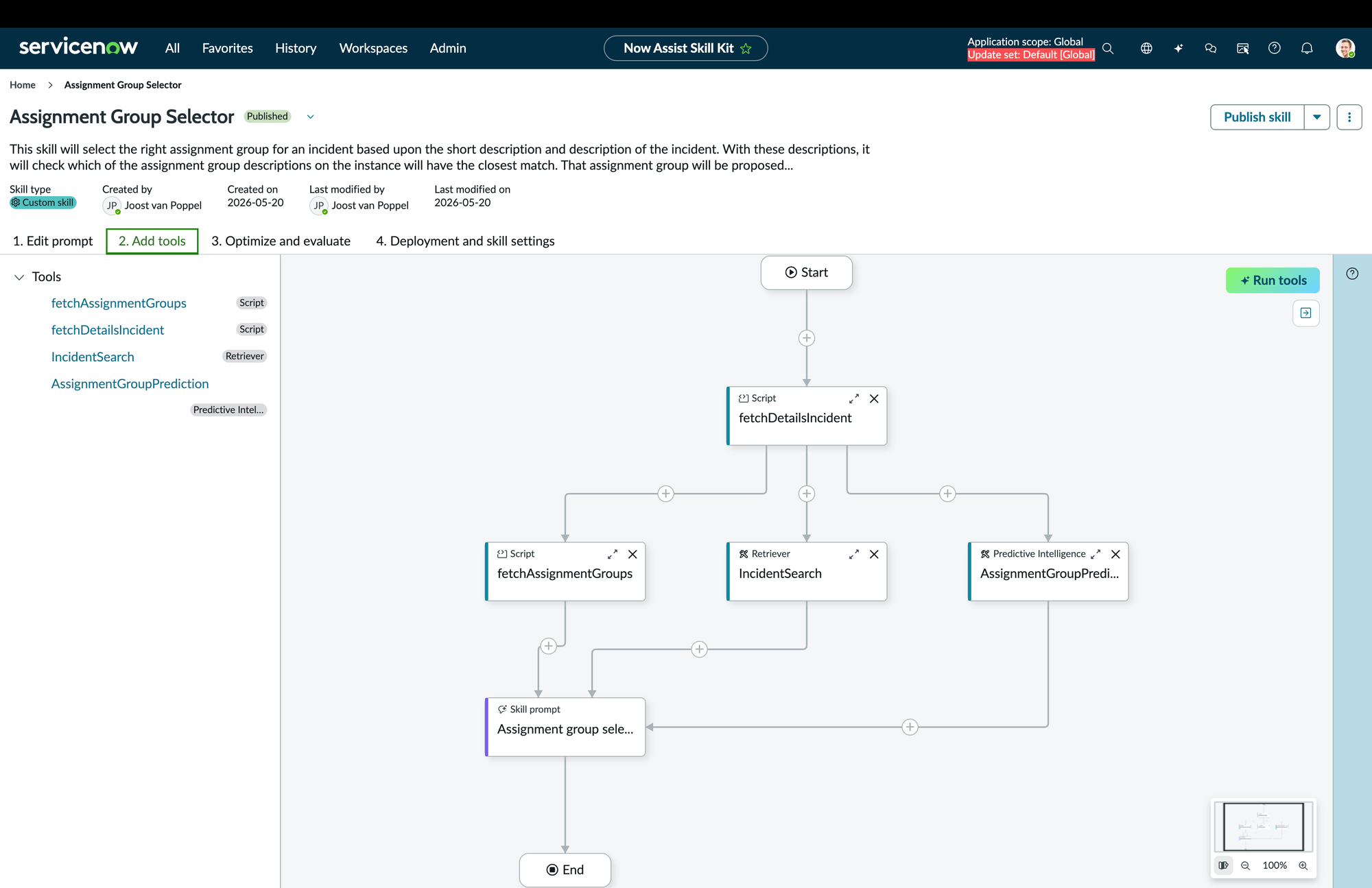
What it does: ServiceNow AI Platform integrates generative AI and virtual agents into the Now Platform to automate IT service management (ITSM), HR service delivery, and enterprise ticket resolution.
Best for: Large enterprise IT, HR, and service management departments managing ITIL service desk processes.
Factual pros:
- Deep integration with enterprise IT service desk and change management databases (CMDB).
- Strict enterprise role-based access control (RBAC) and audit logging.
Factual cons:
- Enterprise-only scope with high licensing costs and deployment complexity.
- Not designed for lightweight small-business sales or marketing outreach.
Publicly verified pricing model: Custom enterprise licensing based on platform tier and seat volume (contact sales).
Non-fit scenarios: Small-to-midsize businesses seeking agile sales or customer messaging digital workers.
5. n8n: Best for developer-led open-source workflow automation and self-hosted AI execution
What it does: n8n is a fair-code open-source workflow automation tool that allows technical teams to build custom AI workflows and agent nodes on self-hosted Docker infrastructure or cloud servers.
Best for: Developers, DevOps engineers, and technical operations teams wanting full data sovereignty and self-hosted automation control.
Factual pros:
- Self-hostable open-source core ensuring complete data privacy and sovereignty.
- Fair-code license allows extensive code customization and custom node development.
Factual cons:
- Requires technical setup, server maintenance, and Docker management for self-hosted instances.
- No out-of-the-box non-technical business interface for non-developer end users.
Publicly verified pricing model: Self-hosted core is free under sustainable use license; hosted cloud plans start at $20 per month.
Non-fit scenarios: Non-technical business leaders seeking turn-key pre-configured digital workers without software maintenance.
Key considerations for enterprise AI worker selection
Selecting an enterprise AI worker platform requires assessing existing software ecosystem tie-ins, data privacy requirements, and governance mechanisms. For additional comparative details on lower-level agent builders and pre-built worker roles, consult our companion guides on best digital employees and AI agent platforms.
Frequently asked questions
What is the difference between an AI agent platform and an AI worker platform?
An AI agent platform provides orchestration tools and developer frameworks to construct agents. An AI worker platform provides managed, pre-built role workers complete with multi-channel connectivity, persistent context, and enterprise governance controls.
How do human-in-the-loop approval controls function in enterprise platforms?
Human-in-the-loop controls route high-risk or external worker actions to a designated human supervisor before execution, ensuring quality control and audit compliance.
Can enterprise AI worker platforms connect to custom internal APIs?
Yes. Enterprise platforms like Spinnable and Microsoft Copilot Studio support custom webhooks and REST API endpoints to exchange data with proprietary databases.
Deploy autonomous AI workers with Spinnable
Transform enterprise productivity by deploying managed AI workers with multi-channel connectivity and built-in governance controls.