

An AI agent security checklist establishes mandatory technical and operational safeguards before an autonomous system is granted access to corporate systems, data repositories, or execution environments. Unlike static LLM chatbots, autonomous agents take actions, call APIs, read and write database records, and communicate with external services. Implementing pre-execution controls prevents unauthorized data exfiltration, unapproved financial transactions, and credential exposure. This checklist provides 12 vendor-neutral controls to evaluate AI agent security across self-hosted open-source software and managed platforms.
Executive summary
Deploying AI agents without deterministic boundaries introduces severe operational and security risks. While large language models generate text, agentic AI systems execute tools, issue system commands, and modify state across business tools. Securing an agentic workforce requires shifting from post-hoc output filtering to pre-execution control. This operational checklist outlines 12 security controls grouped into four core pillars: identity and credential governance, runtime isolation and permission rules, continuous monitoring and human oversight, and pre-deployment evaluation with incident response. Securing agent deployments demands verifiable isolation, cryptographically logged actions, explicit action allowlists, and immediate revocation mechanisms.
At-a-glance 12-control security checklist
| Control number and area | Primary security objective | Standard requirement vs best practice |
|---|---|---|
| 1. Identity and ownership | Bind agent to explicit IAM role and human supervisor | Standard: Service principal per agent. Best practice: Short-lived SPIFFE workload identities. |
| 2. Least privilege access | Scope tool and API rights to exact task bounds | Standard: Scoped API tokens. Best practice: Ephemeral session-based authorization boundaries. |
| 3. Credential isolation | Prevent raw secrets from appearing in LLM prompts | Standard: Secret manager injection. Best practice: Vault proxy execution where LLM never handles secrets. |
| 4. Data boundaries and retention | Restrict egress and enforce zero-data-retention | Standard: Egress domain allowlists. Best practice: Ephemeral storage with verified model vendor DPAs. |
| 5. Prompt injection defense | Sanitize untrusted external data inputs | Standard: Context separation tags. Best practice: Dual-model inspection guardrails before execution. |
| 6. Action allow and deny rules | Enforce code-level gateways on tool parameters | Standard: Static parameter validation. Best practice: Deterministic policy engine blocking unapproved calls. |
| 7. Human approvals | Require manual review for high-impact state changes | Standard: Threshold-based authorization. Best practice: Contextual approval routing with timeout revocation. |
| 8. Execution isolation | Prevent host system access and cross-tenant leakage | Standard: Isolated container runtimes. Best practice: Short-lived micro-VM sandboxes with read-only roots. |
| 9. Audit logs and traceability | Maintain append-only records of all agent actions | Standard: Centralized API logging. Best practice: Cryptographically signed, step-level trace histories. |
| 10. Anomaly monitoring | Detect runaway loops and resource spikes in real time | Standard: Rate limiting and cost caps. Best practice: Behavioral anomaly detection with automated pauses. |
| 11. Pre-deployment evaluation | Test prompts and tools against security benchmarks | Standard: Manual red teaming. Best practice: CI/CD security gate testing and regression suites. |
| 12. Incident response and revocation | Provide immediate kill switches and vendor vetting | Standard: Manual credential rotation. Best practice: Single-click token revocation and automated isolation. |
Role-based AI workforce security evaluation
Organizations evaluating AI workforce deployment choose between self-hosted open-source framework architectures, such as OpenClaw 2.0, and fully managed persistent digital colleague platforms like Spinnable. Each model presents distinct trust, security, and maintenance characteristics that security teams must evaluate.
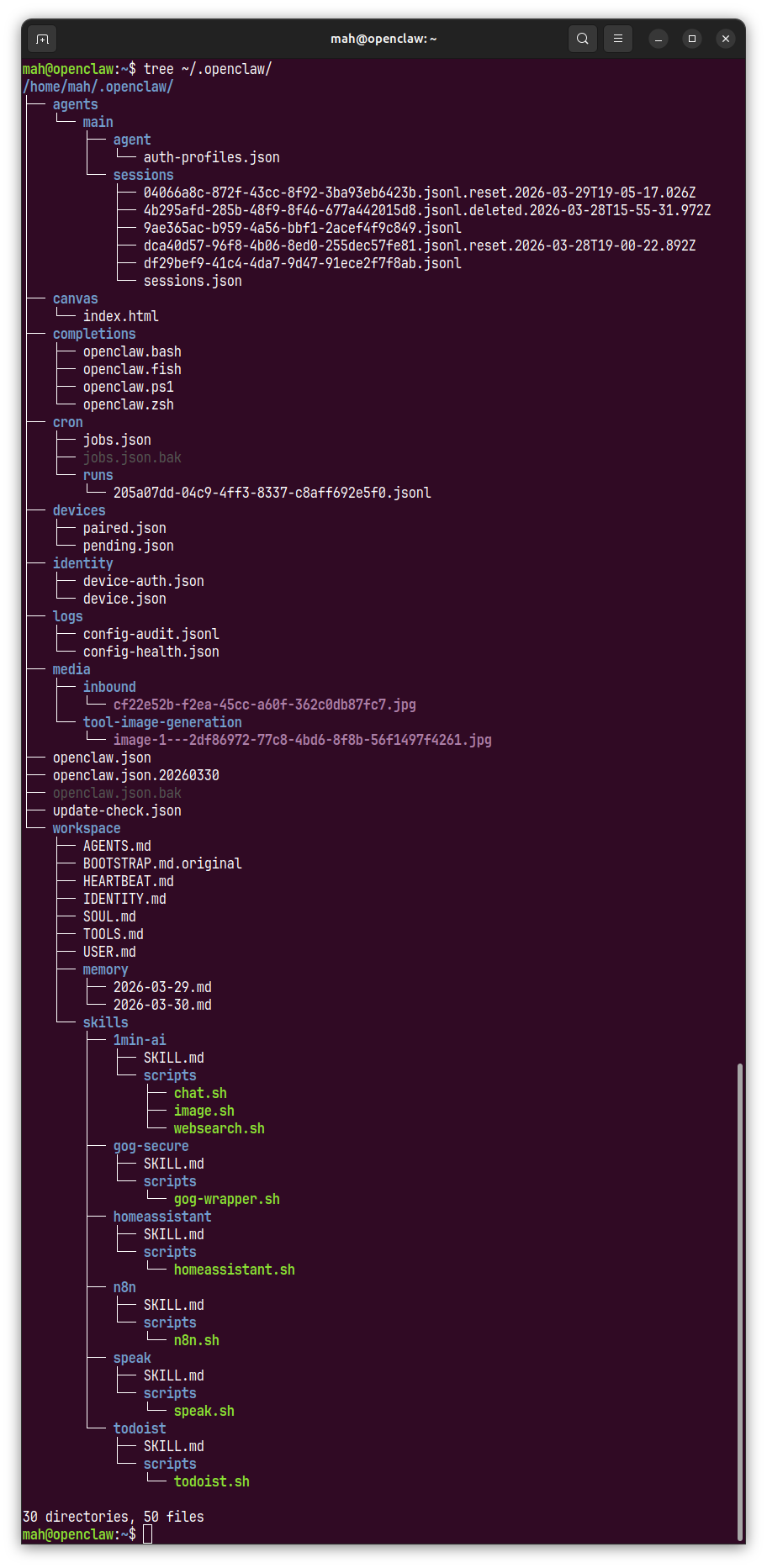
Self-hosted open-source frameworks grant complete control over infrastructure and source code. OpenClaw 2.0, for example, runs locally in user workspaces and executes shell commands and local file modifications. However, local or self-hosted execution shifts full responsibility for sandbox isolation, credential rotation, vulnerability patching, and prompt injection defense onto internal IT and security teams. Without hardened containerization and strict permission boundaries, local execution risks exposing system tokens and underlying network interfaces.
Managed persistent digital colleague platforms deliver pre-hardened environments with built-in governance, encrypted credential vaults, role-based access control, and audited runtime execution. Spinnable provides persistent digital colleagues that operate as managed digital teammates with human oversight and controlled system access, rather than raw API wrappers or unmonitored scripts. Spinnable operates in full compliance with European Union General Data Protection Regulation (GDPR) requirements and maintains SOC 2 compliance in progress. Managing security through structured AI worker platforms minimizes maintenance overhead while enforcing enterprise security boundaries across all digital worker workflows.
12 Security controls before an agent acts
The following 12 controls provide an operational checklist for evaluating agent safety before enabling live production execution across enterprise environments. Teams evaluating broader governance criteria can refer to the enterprise AI agent platform evaluation checklist and technical AI agent guardrails design guide.
Control 1: Identity, workload attribution, and ownership
Risk: Agents executing under shared service accounts or unmapped identities prevent accurate audit attribution and allow non-repudiation failures during security incidents.
Good implementation: Assign each AI agent a unique machine identity (SPIFFE ID or dedicated IAM principal) tied to a human owner. Enforce short-lived session tokens and map all tool calls directly to the assigned service principal of the agent.
Buyer evidence: Provisioning logs showing individual IAM roles per agent, automated owner mapping in the identity provider, and token issuance records with explicit identity tags.
Practical question: Can your security team trace every automated action taken in Salesforce or GitHub back to a specific named agent identity and its designated human supervisor?
Control 2: Least privilege access and permission boundaries
Risk: Granting agents broad administrative rights or multi-tenant database access allows minor prompt deviations or tool misconfigurations to compromise full enterprise systems.
Good implementation: Restrict tool permissions to the minimum set of read, write, and execute scopes required for specific workflows. Apply explicit scoping policies on API keys and database connections.
Buyer evidence: Scoped API token configurations, role-based access control (RBAC) policy exports, and automated permission boundary enforcement logs.
Practical question: Are your agent API credentials limited strictly to the target repository or folder, or do they carry domain-level read and write permissions?
Control 3: Ephemeral credentials and secret vault isolation
Risk: Hardcoding long-lived API keys, database credentials, or OAuth tokens into agent prompt contexts or local configuration files exposes secrets to log leaks and prompt exfiltration.
Good implementation: Store credentials in dedicated hardware security modules (HSM) or encrypted secret vaults. Inject short-lived ephemeral tokens into execution runtimes at the exact moment of tool execution, preventing LLMs from seeing raw secrets in context windows.
Buyer evidence: Integration with secret managers (such as HashiCorp Vault or AWS Secrets Manager), short token expiration windows (less than 60 minutes), and context redaction filters.
Practical question: Does the agent LLM context window ever contain raw plain-text API secrets or private signing keys?
Control 4: Data boundaries, egress control, and retention policies
Risk: Unrestricted outbound internet access or unencrypted local data caching risks indirect data exfiltration and violation of privacy regulations.
Good implementation: Enforce egress firewall filtering that restricts network calls of the agent to pre-approved domain allowlists. Configure automatic data retention limits and enforce zero-data-retention agreements with underlying model providers.
Buyer evidence: Network firewall allowlist configurations, data processing agreements (DPAs) confirming zero model-training retention, and encrypted storage configurations for session history.
Practical question: Is outbound internet access from the agent execution runtime restricted to explicit corporate domain allowlists?
Control 5: Indirect prompt injection defense and input sanitization
Risk: Untrusted external inputs (such as incoming customer emails, web pages, or PDF documents) can contain malicious instructions that override system prompts and trick agents into executing unauthorized commands.
Good implementation: Separate untrusted external data from system instructions using structural boundary tags, pre-processing input sanitization filters, and dedicated secondary inspection classifiers that evaluate tool inputs before execution.
Buyer evidence: Input sanitization pipeline documentation, automated prompt injection benchmark results, and secondary verification guardrail logs.
Practical question: How does the agent validate that a command embedded in an incoming customer support ticket does not override its primary execution system prompt?
Control 6: Deterministic action allow and deny rules
Risk: Relying solely on probabilistic LLM reasoning to decide whether an action is safe leads to unpredictable state changes and security bypasses.
Good implementation: Implement a deterministic code-level gateway between the model and external execution environments. Enforce hard allowlists and denylists for tool invocations, API endpoints, and parameter values regardless of LLM intent.
Buyer evidence: Code-level gateway configuration files, tool schema validation rules, and blocked execution logs showing deterministic rejection of out-of-scope actions.
Practical question: Is there a hard code-level check that blocks destructive actions (such as system file deletion or table drops) regardless of model output?
Control 7: Human in the loop approvals for high-risk actions
Risk: Autonomous execution of high-impact transactions (such as wire transfers, bulk data deletion, or production deployments) without human review leads to irreversible damage from False positives or compromised logic.
Good implementation: Categorize agent actions by impact tier. Require mandatory synchronous human authorization before executing actions above designated risk thresholds, delivering clear contextual summaries to designated human approvers.
Buyer evidence: Approval policy workflows, human approval audit trails with timestamped user signatures, and risk-tier action mapping documentation.
Practical question: Which specific actions automatically trigger a mandatory human approval request before execution?
Control 8: Secure execution isolation and runtime sandboxing
Risk: Running agent tool scripts or code execution environments directly on local developer hardware or host operating systems risks host compromise, container breakouts, and unauthorized local network scanning.
Good implementation: Run all agent tool executions, code generation tasks, and web browsing sessions within ephemeral, micro-VM or containerized sandboxes with restricted network namespaces and read-only root filesystems.
Buyer evidence: Micro-VM container runtime architecture documentation, ephemeral sandbox teardown logs, and kernel isolation benchmark reports.
Practical question: Does tool execution occur inside an isolated, short-lived sandbox environment or directly on the host application system?
Control 9: Cryptographic audit logging and step-level traceability
Risk: Incomplete logging or modifiable audit records prevent effective forensic investigations following a security breach or operational error.
Good implementation: Capture append-only, tamper-evident logs for every agent execution step, including incoming prompts, intermediate reasoning, tool parameters, raw API responses, and human approval decisions.
Buyer evidence: Exportable SIEM log integrations, immutable log storage configurations, and step-level trace logs with correlation IDs.
Practical question: Can your security team reconstruct the exact sequence of reasoning steps, API payloads, and system responses for an incident that occurred 30 days ago?
Control 10: Real-time anomaly monitoring and behavioral guardrails
Risk: Runaway loops, sudden spikes in API resource consumption, or atypical tool usage sequences can cause service outages, unexpected billing costs, or undetected data exfiltration.
Good implementation: Monitor agent behavioral metrics in real time, enforcing rate limits, maximum token thresholds, cost caps, and automated anomaly detection that pauses execution when metrics deviate from baseline patterns.
Buyer evidence: Real-time monitoring dashboards, rate limit configuration rules, and automated circuit breaker alert triggers.
Practical question: What automated circuit breakers halt agent operations if an agent enters an infinite retry loop or exceeds its daily token budget?
Control 11: Pre-deployment evaluation, red teaming, and regression testing
Risk: Deploying agents without rigorous security benchmarking exposes production environments to unhandled edge cases, safety regressions, and known vulnerability exploits.
Good implementation: Subject all agent workflows and prompt configurations to automated red teaming, adversarial prompt testing, and task accuracy regression evaluations before promoting code to production.
Buyer evidence: Pre-deployment evaluation test suites, red teaming vulnerability reports, and CI/CD security gate policy configurations.
Practical question: What automated security evaluation suite runs against modified agent prompts and tool definitions prior to deployment?
Control 12: Emergency revocation, incident response, and vendor risk
Risk: Inability to immediately disable a malfunctioning or compromised agent allows ongoing unauthorized activity, while unvetted third-party vendor dependencies introduce supply chain risks.
Good implementation: Maintain a single-click global emergency kill switch that revokes all agent session tokens and halts active runtimes. Establish formalized incident response playbooks and verify third-party vendor security postures, SOC 2 compliance status, and data handling practices. Understanding AI worker pricing models helps teams evaluate vendor commitments alongside technical controls.
Buyer evidence: Demonstrated kill-switch test results, incident response playbook documentation, vendor SOC 2 Type II reports or compliance status attestations, and third-party security assessment documentation.
Practical question: How quickly can an administrator revoke all active OAuth tokens and terminate running tasks for a specific agent across all connected services?
Framework crosswalk: Standards vs. operational best practices
To help security teams align operational requirements with established cybersecurity frameworks, this crosswalk maps the 12 controls to the NIST AI Risk Management Framework (NIST AI 100-1 and GenAI Profile NIST AI 600-1), OWASP GenAI LLM Top 10 (2026 Edition), and Cloud Security Alliance (CSA) AI Control Matrix. It distinguishes standard baseline compliance from operational best practices.


| Control area | NIST AI RMF / AI 600-1 mapping | OWASP GenAI Top 10 mapping | CSA AI control mapping | Standard vs best practice distinction |
|---|---|---|---|---|
| 1. Identity and ownership | GOVERN 1.2, MANAGE 2.1 | LLM07: System Location & Identity | IAM-01, IAM-02 | Standard requires service principal mapping; best practice mandates short-lived SPIFFE workload identities. |
| 2. Least privilege access | PROTECT 2.1, MANAGE 1.3 | LLM06: Excessive Agency | IAM-03, AAC-01 | Standard scopes static API keys; best practice enforces dynamic context-aware token scoping. |
| 3. Credential isolation | PROTECT 1.1, MANAGE 2.3 | LLM06: Excessive Agency | SEF-02, IVM-01 | Standard uses secret managers; best practice executes vault proxies where models never see secrets. |
| 4. Data boundaries and retention | GOVERN 3.1, PROTECT 3.2 | LLM02: Sensitive Information Disclosure | DSP-01, DSP-02 | Standard enforces egress domain allowlists; best practice pairs ephemeral storage with zero-training DPAs. |
| 5. Prompt injection defense | PROTECT 1.2, MANAGE 2.4 | LLM01: Prompt Injection | AIS-01, AIS-02 | Standard uses structural boundary tags; best practice runs multi-model input classification guardrails. |
| 6. Action allow and deny rules | PROTECT 2.2, MANAGE 2.1 | LLM06: Excessive Agency | LOG-01, AAC-02 | Standard validates tool schemas; best practice enforces deterministic code gateways on all actions. |
| 7. Human approvals | GOVERN 2.1, MANAGE 3.1 | LLM06: Excessive Agency | HRS-01, GOV-03 | Standard requires manual approval for high values; best practice automates risk-tiered contextual routing. |
| 8. Secure execution isolation | PROTECT 2.3, MANAGE 2.2 | LLM05: Supply Chain Vulnerabilities | BCR-01, IVS-01 | Standard uses container isolation; best practice provisions short-lived micro-VM sandboxes. |
| 9. Cryptographic audit logging | GOVERN 1.3, MANAGE 4.1 | LLM08: Vector & Data Exposure | LOG-02, LOG-03 | Standard logs API calls centrally; best practice records cryptographically signed step-level traces. |
| 10. Anomaly monitoring | MEASURE 2.1, MANAGE 2.5 | LLM04: Model Denial of Service | MON-01, MON-02 | Standard sets rate limits and cost caps; best practice detects behavioral anomalies with auto-pauses. |
| 11. Pre-deployment evaluation | MEASURE 1.1, MEASURE 2.2 | LLM09: Misinformation & Overreliance | TVM-01, TVM-02 | Standard relies on manual red teaming; best practice automates CI/CD prompt and tool evaluation pipelines. |
| 12. Incident response and revocation | MANAGE 4.2, GOVERN 4.1 | LLM05: Supply Chain Vulnerabilities | HRS-02, BCR-02 | Standard maintains incident playbooks; best practice provides single-click global token revocation. |
Methodology and standards references
This checklist was developed by analyzing published cybersecurity standards, leading open-source agent frameworks, and commercial platform security architectures. Framework references include NIST AI RMF 1.0 (NIST AI 100-1), NIST Generative AI Profile (NIST AI 600-1), OWASP GenAI LLM Top 10 (2026 Edition), and Cloud Security Alliance AI Organizational Security Guidance. Platform analysis includes published security documentation for OpenClaw 2.0 open-source workspace software, Microsoft Copilot Studio, AWS Bedrock Agents, Anthropic Claude enterprise security, and Spinnable persistent digital colleague architecture. Organizations evaluating enterprise deployments can review AI agent platforms to examine commercial governance capabilities.
Frequently asked questions
What is the primary security difference between an LLM chatbot and an AI agent?
An LLM chatbot processes inputs and generates text within an isolated interface, whereas an AI agent possesses tool execution capabilities, API credentials, and memory to perform multi-step actions across external software systems. Securing an agent requires evaluating authorization boundaries and execution sandboxes in addition to prompt safety.
How does indirect prompt injection threaten enterprise AI agents?
Indirect prompt injection occurs when an agent ingests untrusted third-party data (such as emails, uploaded documents, or web pages) containing hidden instructions that alter its behavior. These embedded commands trick the agent into exfiltrating sensitive data, invoking restricted APIs, or bypassing approval guardrails.
Should AI agents run on developer hardware or self-hosted servers?
Running autonomous AI agents directly on developer hardware or unisolated host servers creates severe security exposure. Local execution environments often share access to local file paths, active user sessions, and internal network endpoints. Production agent workflows require containerized micro-VM isolation with restricted network namespaces and non-root execution privileges.
How do managed persistent digital colleague platforms enforce governance?
Managed persistent digital colleague platforms like Spinnable provide pre-configured security controls including encrypted credential vaults, role-based access control, deterministic action allowlists, cryptographic audit logs, and mandatory human approval gates. These built-in safeguards ensure enterprise compliance while eliminating the overhead of managing self-hosted infrastructure.
Is SOC 2 certification mandatory before deploying enterprise AI agents?
While SOC 2 Type II certification demonstrates evaluated operational security controls, organizations deploying AI agents should verify both current vendor certifications and active progress toward compliance. In addition to SOC 2 status, security teams must verify GDPR compliance, data processing agreements (DPAs), zero model training data retention, and strict access controls.
Streamline secure AI workforce deployment
Building secure, governed AI agent operations requires robust identity controls, execution sandboxing, and real-time human oversight. Spinnable provides managed persistent digital colleagues with built-in enterprise security, GDPR compliance, SOC 2 alignment, and deterministic approval controls. Explore Spinnable persistent digital colleagues to deploy an authorized AI workforce across your enterprise workflows today.